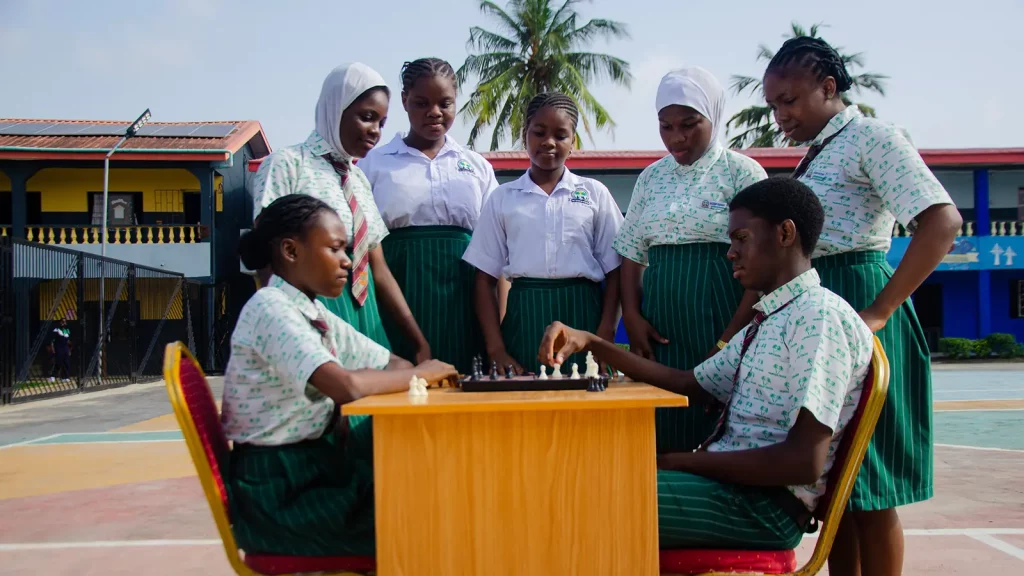
Walk past a group of children bent over a chessboard and you will notice something unusual: silence, focus and total concentration. The benefits of chess for children go far beyond the game itself, because every match is a workout in thinking, planning and self-control.
At Palmville Schools, chess is one of the activities students enjoy outside the regular timetable. This article looks at why the game is so valuable for young minds, and what parents can do to encourage it at home.
Chess and concentration
A chess game cannot be won by rushing. Children must watch the whole board, notice what their opponent is doing and keep their attention on one task for many minutes at a time. In an age of quick videos and constant notifications, that sustained focus is a skill worth protecting.
Many teachers and chess coaches observe that children who play regularly become better at settling down to work. Focus is like a muscle, and chess gives it a pleasant way to grow stronger. Short games of ten or fifteen minutes are ideal for beginners.
At home, you can build this habit gently. Set a timer, agree that the game continues until the timer rings, and praise your child for staying with it. Over a few weeks you will probably find the focus carries into reading and homework.
Problem-solving and planning
Every move in chess is a small problem: how do I protect my piece, attack theirs and prepare the next step? Players learn to think ahead, weigh options and predict consequences, which are the same habits needed for mathematics, science and everyday decisions.
Chess also teaches children to check their work before acting. A hasty move often costs a piece, and children quickly discover the value of pausing to ask, “What happens if I do this?” That habit transfers naturally to exam rooms and homework tables.
Chess also rewards patience with a plan. Children discover that a strong position is built slowly, one careful move at a time, and that rushing to attack usually backfires. That lesson about thinking before acting applies to friendships, money and exams as much as to the board.
- Visualising: imagining the board several moves ahead.
- Evaluating: comparing options before choosing one.
- Adapting: changing the plan when the opponent surprises you.
Learning to win and lose
Chess is honest. There is no luck to blame, so children learn to take responsibility for their moves. Losing teaches resilience, as players review what went wrong and try again with new ideas. Winning teaches humility, because every strong player has also lost many games.
Good chess culture includes handshakes, quiet and respect for the opponent. These small rituals reinforce values such as patience and sportsmanship, which fit closely with our school motto, “Patience & Wisdom.”
Parents can help by praising effort and good thinking rather than only results. A question such as “What was your best move today?” opens a better conversation than “Did you win?”
Join the chess club
Palmville Schools has a chess club where children can learn the game, practise with friends and enjoy friendly competition. Beginners are welcome; there is no need to know the rules before joining, and everyone can find a game at their own level.
To support your child at home, buy an inexpensive board, learn the basic moves together and play a short game a few times a week. Free online puzzles are another good way to practise. To find out more about clubs and activities, visit our primary school and secondary school pages.
If your child is new to the game, tell them that every strong player began by learning how the pieces move. Celebrate small steps, such as winning a piece or spotting a trap, and keep the atmosphere relaxed so chess stays a pleasure rather than a pressure.
Frequently asked questions
What age can children start learning chess?
Many children can learn the basic moves from around five or six, especially through short, playful lessons. Younger children can begin with simple piece games, and older beginners progress quickly.
Does chess make children cleverer?
Chess strengthens habits such as focus, planning and patience, which support learning. It is best seen as excellent mental training rather than a guarantee of higher marks.
Does my child need to be good at maths to enjoy chess?
No. Chess rewards logic and imagination, and children of all strengths can enjoy it and improve with practice.
Chess teaches children to slow down, think carefully and accept the result with grace, lessons that serve them in classrooms and beyond. If your child would enjoy a place where those qualities are encouraged, contact us to arrange a visit to Palmville Schools.